Your kitchen does not have
a hustle problem.
It has an intelligence problem.
When a kitchen runs on individual memory, reactive leadership, and knowledge that walks out the door with every resignation, effort is never the fix. This guide shows you how to change that using AI as an operational tool, not a gimmick.
One-time payment · Instant PDF · Yours to keep
Get Instant Access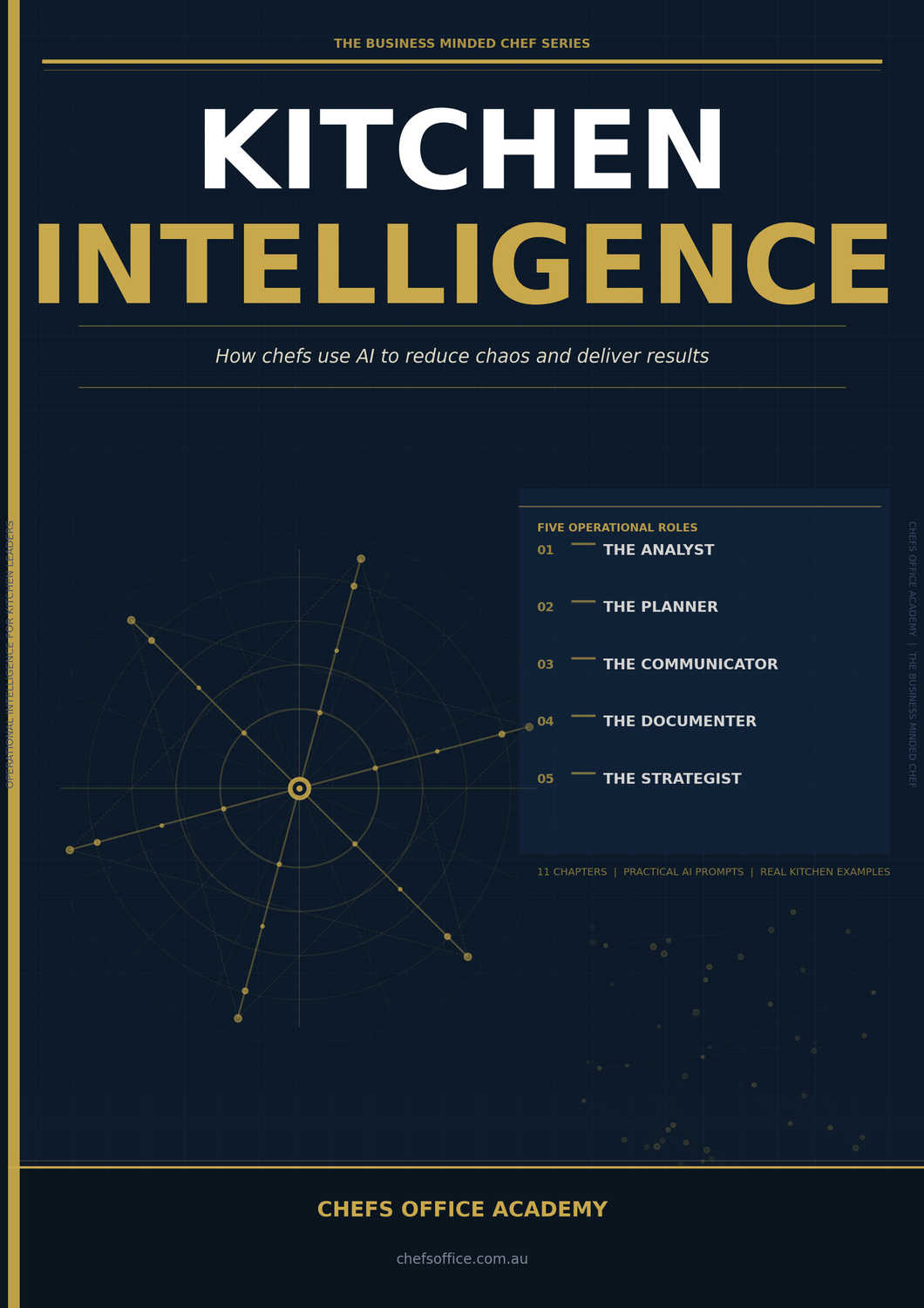
Every kitchen that has ever struggled
has had the same problem.
Too much of how the operation works lives inside individual heads. The head chef knows the prep sequence. The sous knows which supplier to call when the first one fails. The section cook knows the garnish ratio that actually works. When those people are on the floor, things hold. When they are not, the cracks show.
This is not a commitment problem. It is a structure problem.
At the same time, the industry is being flooded with noise about AI. Robots replacing chefs. Automation wiping out hospitality. Or the opposite: AI is a toy with no real use in a professional kitchen. Neither position is useful. Both of them cost you.
This guide takes the third position. Informed leadership. A grounded, tested framework for where AI belongs in a professional kitchen, and where it does not.
Five roles. One
operational system.
AI does not have one function in a kitchen. Depending on what you ask of it, it operates in different capacities. This guide covers all five.
11 chapters. Every AI prompt
included and ready to use.
What changes when a kitchen
starts operating intelligently.
Stop running on memory.
Start operating on systems.
One-time payment · Instant PDF · No subscription
Get Instant AccessRight guide.
Wrong guide.
This is for you if
- Your kitchen only works properly when you are in it
- Knowledge walks out the door every time someone leaves
- You want to understand where AI actually belongs in a professional kitchen
- You are tired of solving the same problems every week
- You want to take days off without coming back to a list of things that broke
This is not for you if
- You think AI has no place in professional kitchens
- You think hustle is a strategy and not a risk
- You are happy being the only person who knows how things work
- You want shortcuts without doing the thinking
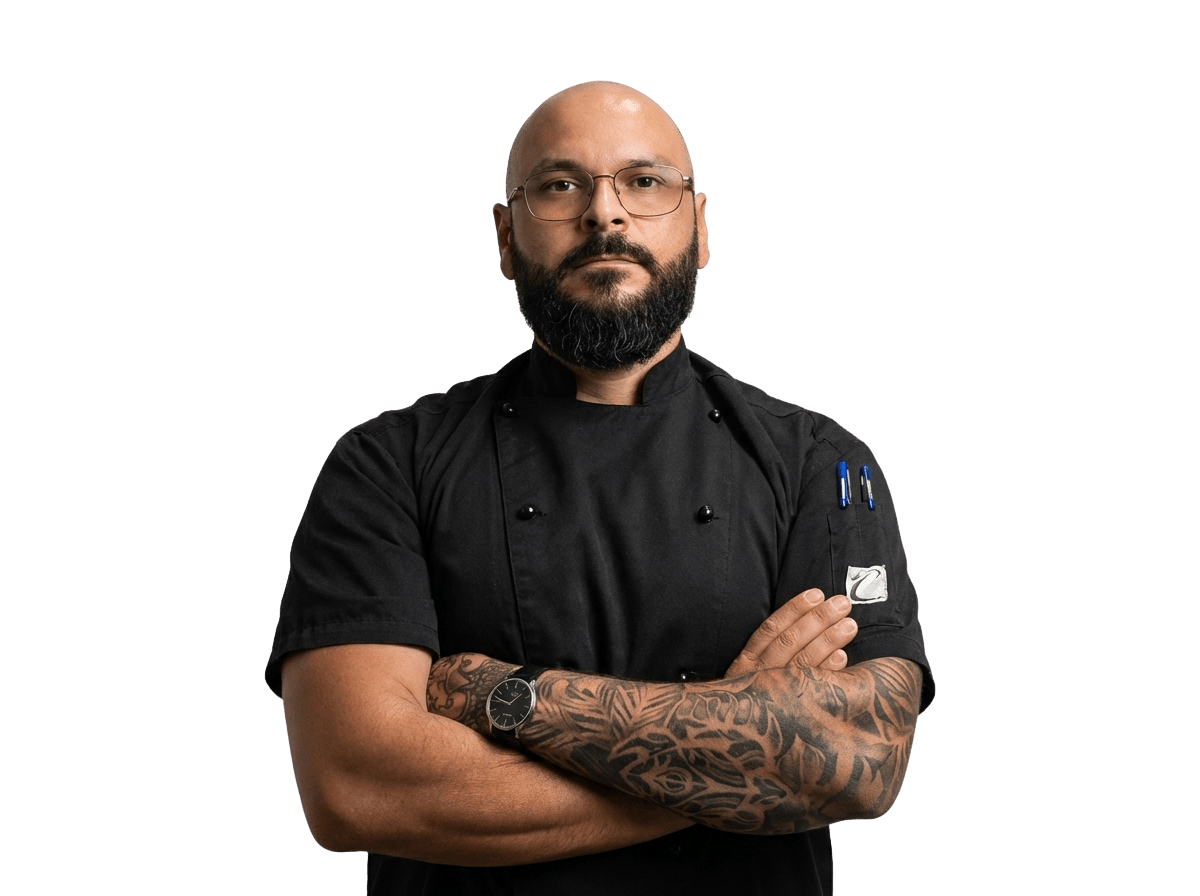
Ricardo Calderini
Founder, Chef's Office Academy
Around twenty years in professional kitchens, and a bachelor's degree in business administration and finance. I have run kitchens where everything worked only because I was always there. I know exactly what that costs: your time, your energy, your ability to develop anyone else, and eventually your willingness to stay in the industry at all.
I also know what it feels like when a kitchen starts running on structure instead of on you. The first time I took two days off and came back to a kitchen that had held. That does not happen by accident. It happens because someone built the systems before they left.
This guide is built from real kitchens. Not a technology conference. Not a consultant's slideshow. Real operations, real prompts, real results.
The future of hospitality belongs to
kitchens that operate intelligently.
Not robotic kitchens. Not kitchens that remove the human element. Kitchens that protect humanity by operating with more structure, more clarity, and less preventable chaos.
One-time payment · Instant PDF · No subscription · Yours to keep
Get Instant AccessIf you read Kitchen Intelligence and do not find at least one practical system you can use in your kitchen this week, email me within 7 days and I will refund you. No forms.